"We Won't Win the War Without Institutional Transformation": Taras Chmut in an Interview

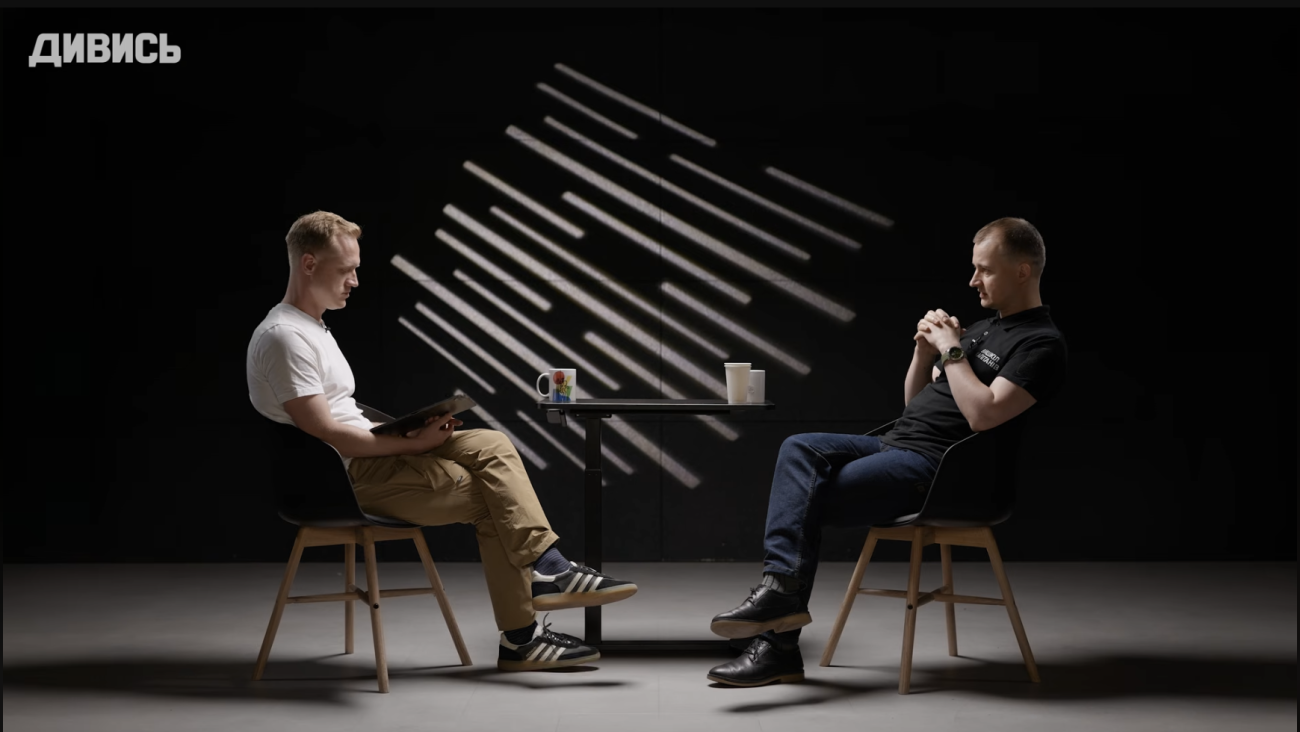
Taras Chmut, Director of the Come Back Alive Foundation, spoke with Roman Kravets, political commentator at Ukrainska Pravda and host of the YouTube project Dyvys. They discussed the resignation of Ukraine’s Minister of Defense and its possible implications, the current situation on the battlefield, the military’s challenges and needs, and why Ukraine’s victory depends on deep institutional transformation rather than short-term fixes.
Below are some of Taras Chmut’s key remarks from the interview.
Russia’s Objectives
Moscow’s aims are remaining unchanged since 2022: to occupy Ukraine or bring it under political or other forms of control, effectively turning it into a satellite state. A more limited scenario would be to seize the eastern regions of Ukraine — Luhansk, Donetsk, Zaporizhzhia, and Kherson oblasts within their full administrative borders, alongside Crimea, which Russia has occupied since 2014. “The next steps would be to stop military operations, negotiate a ceasefire, and move on to political agreements. That is Russia’s baseline working scenario.”
The Situation on the Frontline
Ukraine currently has 13 operational axes along the front, stretching from the north of the country to Kherson Oblast. Russia is concentrating its main offensive efforts on three key sectors in the Zaporizhzhia area: around Sloviansk, Kostiantynivka, and Huliaipole — pursuing broader strategic objectives.
Chmut states that, despite widespread perceptions, Russia’s offensive has slowed and Ukraine’s Armed Forces are successfully conducting a strategic defensive operation. He adds that most territorial losses have occurred on these three priority axes, while fighting elsewhere remains largely tactical, with both sides making limited gains.
“This year is different from previous ones. For the first time, in both February and May, Ukraine regained more territory than it lost,” Chmut said.
Speaking about Ukrainian cities such as Chernihiv, Sumy, Kharkiv, Zaporizhzhia, and Kherson, Taras Chmut emphasized that Moscow is pursuing a deliberate strategy of terror, repeatedly attacking civilians, critical infrastructure, gas stations, and logistics hubs.
The goal is “to put millions of civilian Ukrainians under constant daily pressure — to demoralize them, disrupt their lives and livelihoods, divert resources away from the front line, and shift political attention away from the more urgent challenges of fighting the war. This is a campaign of intimidation. It is terror.”
Frontline Needs
The military’s greatest needs lie not in equipment but in personnel: “The biggest challenge is people — and the quality of leadership and personnel at every level.”
But the military also requires a wide range of equipment and supplies. Among the most common requests the Come Back Alive Foundation receives are various types of vehicles, including pickup trucks, SUVs, vans, ATVs, motorcycles, cargo trucks, buses, and heavy equipment transporters.
The next priority is strike capabilities, particularly medium-range strike systems with a range of approximately 50 to 200 kilometers. “Beyond that is a vast ecosystem of equipment and support systems: Starlink terminals, laptops, generators, radios, tools for drone repair and adaptation, equipment for unmanned ground vehicles, and the unmanned ground vehicles themselves. The list is extensive,” Chmut said.
The State of Ukraine’s Armed Forces
Taras Chmut says Ukraine’s Armed Forces are advancing yet facing mounting challenges, including personnel shortages, declining morale, and the absence of a coherent state policy on mobilization.
“Year after year, the Defense Forces are growing more exhausted. The current tensions involving the Ministry of Defense and the Defense Forces only deepen this sense of demoralization*,” he said.
Chmut explains that the mobilization challenge begins with soldiers’ real-life experiences: “Everyone knows someone who serves — a friend, a classmate, a neighbor, a relative. That person becomes either the strongest advocate for military service or the opposite. Too, it is the latter.”
At the same time, he points to Ukraine’s rapid technological progress as one of the country’s key advantages. “FPV drones, medium-range systems, deep-strike systems, and unmanned ground vehicles are what keep us in the fight today.” He adds that much of this capability has been made possible by European funding for Ukrainian-made drones.
* Editor’s note. At the time of publication, Zelenskyy dismissed the Commander-in-Chief of Ukraine’s Armed Forces, Oleksandr Syrskyi.
Preparing for Winter and the Need for Reform
According to Taras Chmut, the ongoing reorganization of the Ministry of Defense, tensions with the Armed Forces, and the shift in political focus away from the war are undermining Ukraine’s ability to adequately prepare for another wartime winter.
“We still cannot effectively defend against Russia’s ballistic missiles. Russia is also stockpiling jet-powered drones that cannot be intercepted. At the same time, Ukraine’s energy infrastructure cannot be rebuilt in six months or even a year,” he said.
Everyone should start thinking now, in July, about where they will spend the winter. Some people may need to consider moving to a rural area, a smaller town, or even temporarily leaving the country. “Unless there are political agreements or other factors that change the situation, this winter is likely to be extremely difficult, as Russia appears determined to continue striking with ballistic missiles.”
Chmut believes Ukraine’s long-term success depends on systemic reforms rather than short-term crisis management: “Putting out fires may solve immediate problems, but without institutional transformation, we will not win this war. It appears that Russia’s strategy is based on the belief that it can sustain a long war while Ukraine eventually wears down. Our task is to make sure Russia reaches that point first. That means we have to be more effective.”
Watch the full conversation in Ukrainian below.
