Come Back Alive Foundation Instructor Took Part in Developing New Ammunition Against FPV Drones

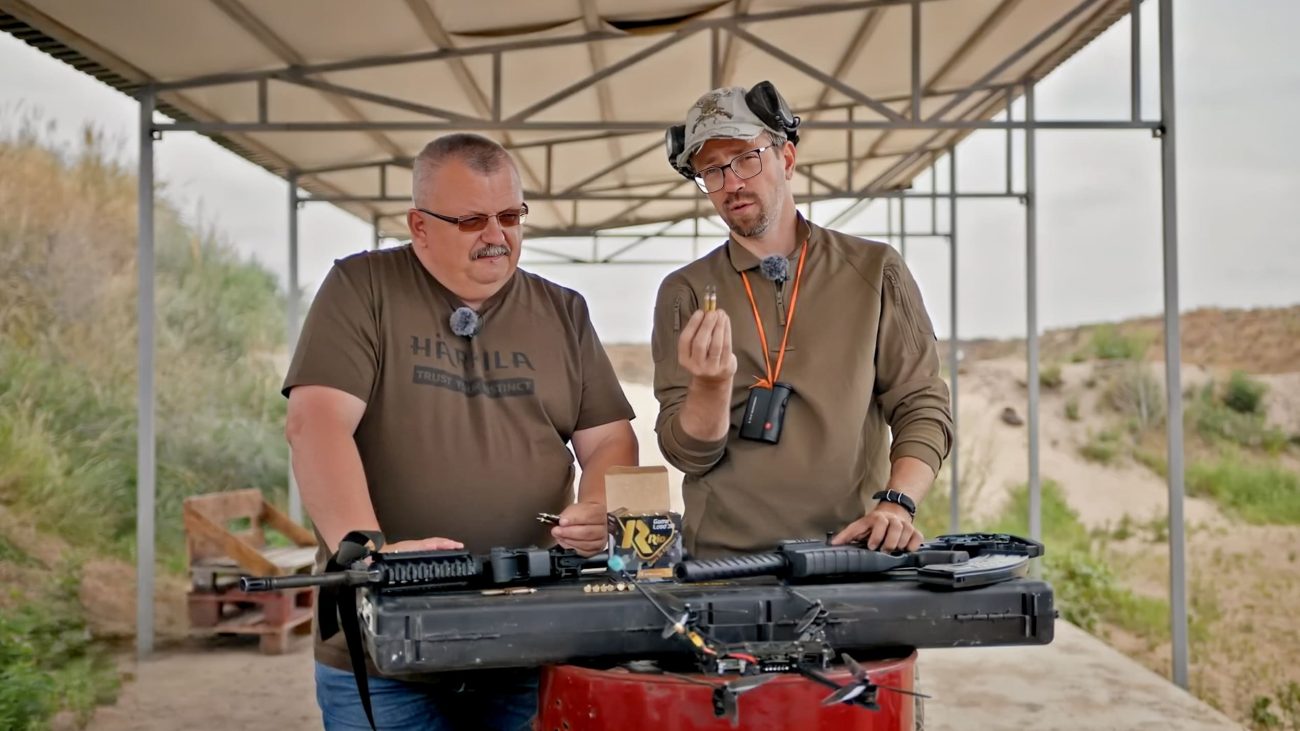
Senior sniping instructor of the Come Back Alive Foundation, Ruslan Shpakovych, contributed to the development of a new segmented round capable of striking enemy FPV drones. In a situation where the enemy employs fiber-optic drones that are unaffected by the electronic warfare means already common at the front, such an innovation can save soldiers’ lives.
Currently, service members are buying smoothbore weapons on their own initiative to hit drones. However, these shotguns require special skills to use and become an additional burden for a soldier who already carries a standard-issue rifled weapon.
To solve this problem, a team of specialists has developed a round that can be used with an AR-15 chambered in 5.56, a standard Kalashnikov chambered in 5.45, or similar rifles.
“This is a segmented munition — meaning it consists of several elements. In practice, we fire once, but not one bullet flies out, four do. We increase the number of projectiles, the impact radius, and the chances of hitting a drone. Essentially, a shotgun works in a similar way: several striking elements are released simultaneously. But they fly at a lower speed and are softer, which means they carry less kinetic energy. At the same time, a drone can be hit with a shotgun at a distance of about 15–25 meters, whereas the new rounds allow engagement from up to 50 meters, and with some luck — even up to 100,” — Shpakovych explains.
Shpakovych says he joined the development back in February, and since then about a dozen and a half technical modifications have been made.
Currently, this round is being tested in the military. If the majority of feedback is positive, mass deployment can be considered.
According to Shpakovych, the new ammunition will be useful not only for infantry but also for UAV crews, evacuation teams, and anyone who encounters the problem of fiber-optic FPVs in their work. However, this method can hardly be called a full-fledged countermeasure against enemy “birds” — rather, it is a personal means of protection, since fire at FPVs should only be opened when there are no options to find cover.
