“We understand that the needs of the army exceed the capabilities of the state, and we step in where we can” — Division Lead, Military Department at Come Back Alive Foundation speaks at the European Parliament


On 19 November 2025, Vladyslav Urubkov, Division Lead, Military Department at Come Back Alive Foundation, delivered a speech at the European Parliament — a key EU institution responsible for shaping the Union’s policies, budget, and security agenda. He briefed the international community on the current state of the Ukrainian army and the challenges Ukrainian soldiers face on the frontline. Vladyslav also explained why continued European support — financial, political, and energy-related — remains critical for Ukraine.
Vladyslav was born in Donetsk and, at 16, was forced to leave his home due to the first Russian invasion. In 2022, he officially became an officer and spent nearly two years on the frontline. After completing his service, he joined the Military Department of Come Back Alive Foundation, where he applies his combat experience to develop projects that help Ukrainian forces operate more effectively.
Come Back Alive Foundation has been operating since 2014 and is the largest non-governmental, defence-oriented organisation in Ukraine. Under Vladyslav’s leadership, the Unit in Military Department provides units with essential equipment and operational support. Since 24 February 2022, the Foundation has raised nearly one billion euros for the needs of Ukraine’s Defence and Security Forces.
Vladyslav began his address by drawing a parallel between how the Foundation evolved from 2014 to 2022, before outlining what the Ukrainian military needs most today. Below is a shortened version of Vladyslav Urubkov’s speech.
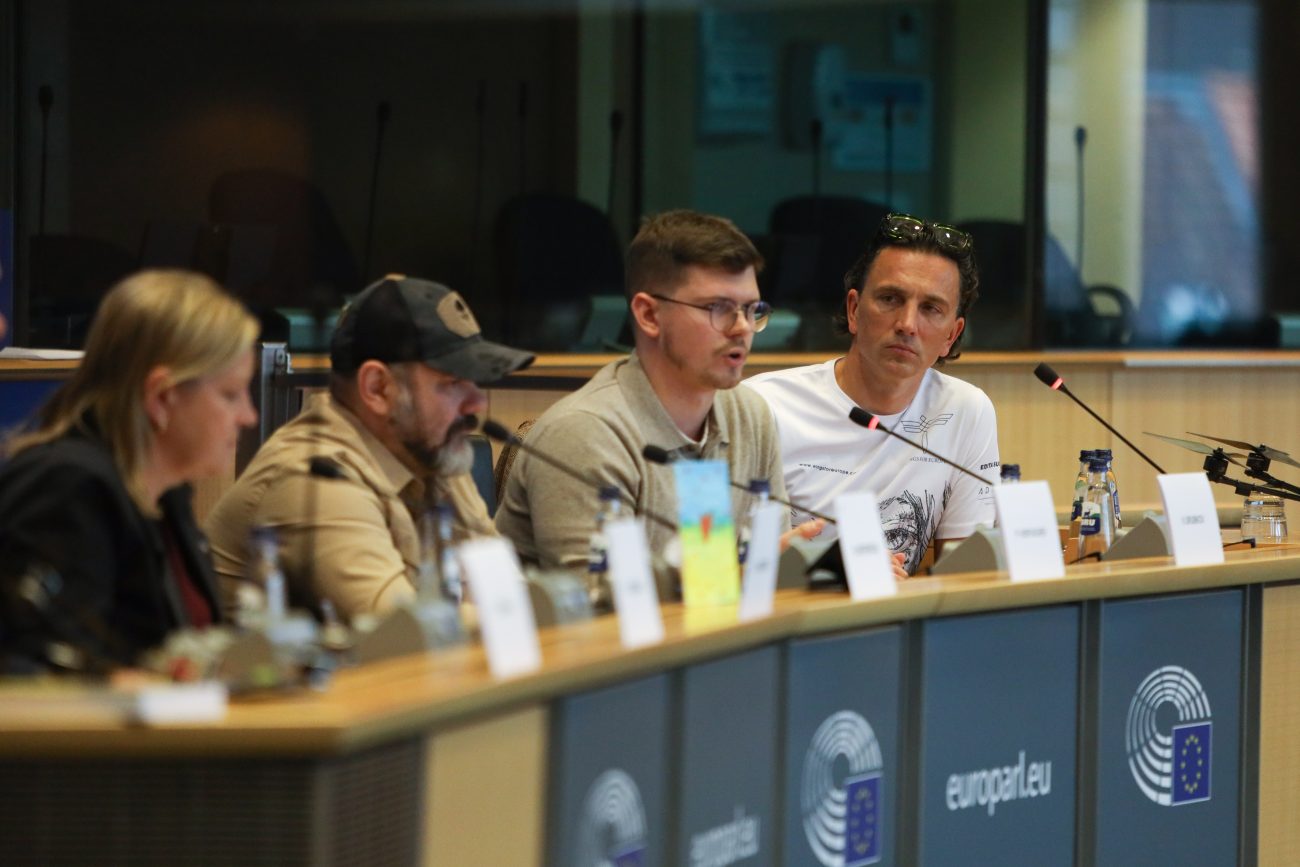
When Russia came again in 2022 with the full-scale invasion Come Back Alive Foundation was much better prepared. After 8 years of supporting army in critical moment organisation received and managed dozens million euros of donations. And they used it effectively. I was also ready in 2022. I joined the army as an officer. I was taking part in combat actions for a year and a half. Kherson counteroffensive, defense of Bakhmut and battles near Kreminna. I will never forget that experience. In Ukraine the civil society has its slogan: You are either IN the army or FOR the army. Therefore after resigning from the service I joined military department of Come Back Alive Foundation where I can use my skills and knowledge the best way to keep helping my army and my country.
Right now Come Back Alive Foundation is the strategic partner of our state and during the wartime primarily – of Ukrainian Defence and Security Forces. It is not just loud words but the fact determined in the memorandum with Ministry of Defence of Ukraine, National Guard, NABU and SAPO, Ministry of Healthcare, Ministry of Veterans. We work with various stakeholders in Ukraine and abroad to strengthen our common defence and security. We supply our soldiers with weapons, cars, drones, electronic warfare, power stations, walkie-talkies, even underwater equipment. Frankly, with almost everything what is vital for the frontline. I would put a stress here, we do not substitute the state, we do not try to do something instead of state. We understand that the needs of the army are bigger that the state capabilities and we help where we can. It appeared to be effective cooperation: for example, recently we received the request from our Air Force command and in some months of fully NDA work we created special mobile infrastructure for our F-16s. This is how the strategic cooperation look like.
How we know what to supply. This is the responsibility of my division in particular. Most people in my department are veterans, we know the army very well from inside. We work with perhaps every battalion, regiment, brigade and corps within the Defence and Security Forces and now there are hundreds of them. We verify their requests thoroughly because we are responsible for the money of our donors. At the same time we are kind of RND department. We are always looking for some innovations to scale them. It is a successful story of our Dronefall project. The frontline was suffering because of Russian reconnaissance drones which flew deep into our territory and make missiles strikes more precise. It was expensive to use air defence systems and we never had plenty of ammo. We found pilots which unofficially destroyed those drones with FPV. We scaled that experience, we created an infrastructure for pilot teams. After a year almost every brigade had its official platoon of interceptors. It changed the frontline drastically. And now this project helps to destroy Shahed drones.
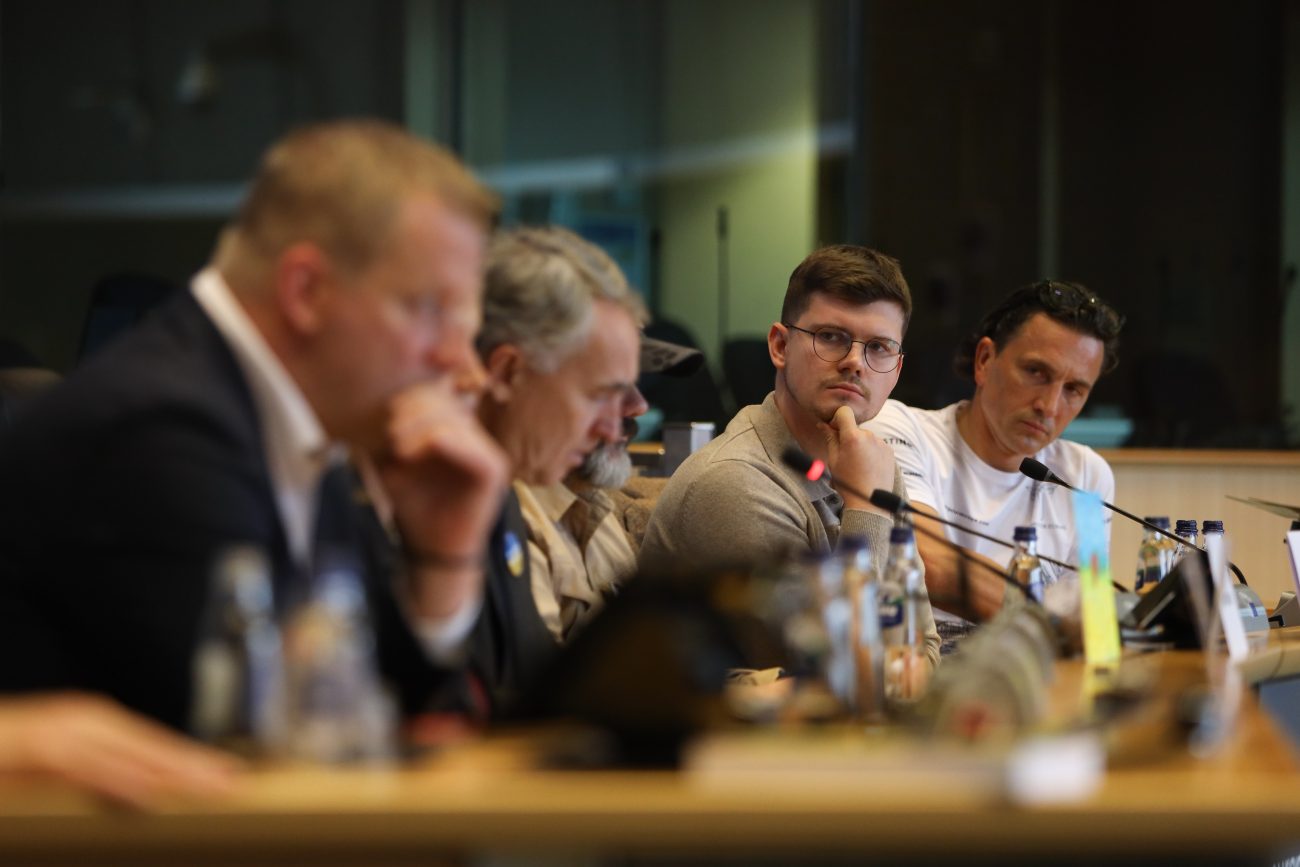
How we raise money. For almost 12 years we have been working on our status as a trustworthy charitable institution. A lot of people evaluate that and donate money to us. As I said before 2022 it was roughly million euros per year. Since the February, 24 we raised almost a billion euros for the army. To scale our capabilities we started to make common projects with private businesses, with state companies and, recently, with international donors. It became possible because of our values, our expertise and our transparent reporting. Everybody can visit our website and see how we used his or her donated money. With photo, with signed documents with everything to be sure that you actually helped Ukrainian army.
Come Back Alive Foundation support Defence Forces not only with buying necessary staff. We do provide another strategic approaches. For instance, we create and support specialised training centres for the army. They are official part of military hierarchy but we are responsible for each step: from planning to building, from developing programme to recruitment of instructors. We created Yatahan school for drone pilots, as well as the Varan School for robotic complexes pilots. Electronic warfare school and instructors school are another examples of our work. Moreover, we take part in shaping defence policies. Our analytical department is preparing public and limited access researches on the crucial topics such as mobilisation and basic training course issues, Russian studies, Strategic Studies,, etc. After analysis we prepare recommendations and advocate them directly with the decision-makers.
What are the biggest challenges nowadays. One of the main tasks in my division: we make regular trips to the frontline. We collect the requests of military units, load our cars with goods and just go. Personal contact is very important for us, moreover we see the real situation near the frontline: we understand logistics, current conditions, up-to-date needs. We often listen to the same problems, therefore we can identify them as tendencies and then react.
And thirdly, we see the hybrid and sometimes physical attacks by Russians towards the EU countries. The main goals are to prevent you from supporting us, force you to focus internally and check the red lines. Where there may go before the get real response.
First of all, we have the enemy who exceeds us regarding manpower, budget, production capabilities. They are eager to win this war because they bet everything on it, no matter what. They have crazy but clear goals. They are learning fast, scaling innovations fast and developing themselves. At the same time we face strategic problem with lack and exhaustion of our people, especially infantry. The one may say that the frontline is moving too slow in comparison to Russian resources. It is true but from the other point of view this is happening constantly and behind every inch on the map are lives and health of our soldiers. We do have problems inside but we see them and try to change just in the middle of the war. Secondly, Russians attack our rear cities and regions and now we have serious electricity problems again. Ahead of the winter it has a huge impact on the society and economics. There are some good news too. Now we are able to strike back heavily and massively.
