“The more drones we shoot down with low-cost means, the fewer expensive missiles we use” — about downing “Shaheds” in the “Dronefall” project

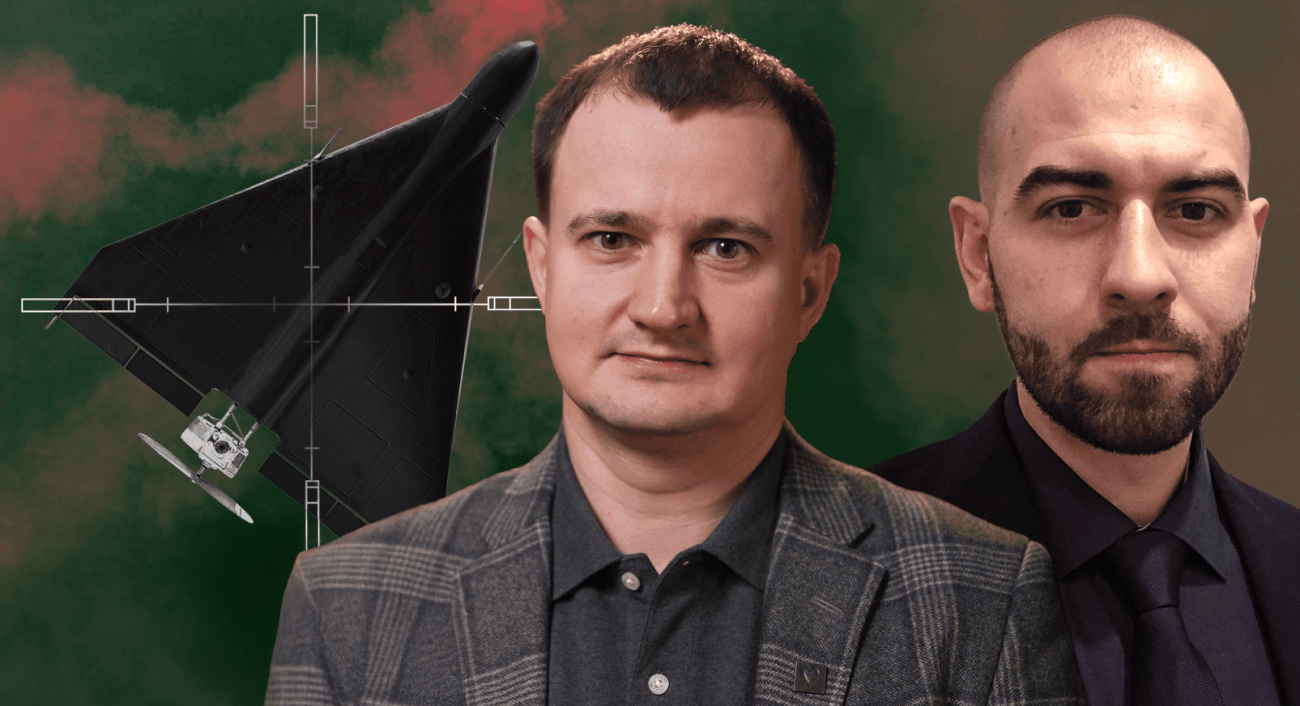
As part of the “Dronefall” initiative, “Shaheds” began to be intercepted. In one episode of “Poplava,” the Director of the Come Back Alive Foundation, Taras Chmut and the military outreach manager Taras Tymochko explained how the “Shahedfall” began, whether decoys should be intercepted, and how the Foundation was collaborating with the state. This text is a summary of their conversation.
“Countdown” and the first systematic interceptions
Since the launch of “Dronefall” we have observed isolated cases of “Shahed” interceptions. Mostly, the military used various means from different manufacturers without a systematic approach.
Later, several units that received equipment under the “Dronefall” program shot down five “Shaheds” using the same means. We decided to provide these means to eight participating units in test mode. That’s when the “Countdown” page appeared on our website. One hundred days later, we published the first results of the experiment — the downing of 17 “Shaheds” and 30 of their cheaper analogues — “Herbers”.
There are even more now, and the number continues to grow.
Today, “Dronefall” includes 88 units. Soon there will be 90, and expansion of the project will pause for some time. We spend about a million UAH per month to equip each unit. The military receives drones, vehicles, electronic warfare systems, tablets, ground stations, and other critical equipment they lack.
Do we raise 90 million UAH or 1,8 million UUR every month? Unfortunately, no. That’s why we are working on transforming our operations and attracting additional funding.
Also — should everyone be intercepting “Shaheds”? Also no. Many want to, but this raises questions about adequate training and overlapping use of resources. Everyone tries to do everything, and the result is insufficient. And sometimes some units directly tasked with air defence can’t find as effective solutions as units with motivated engineers.
Many infantry units with skilled specialists could intercept “Shaheds” and other drones. But these tasks should primarily be handled by anti-aircraft missile regiments, or perhaps by air defence units that have proven capable. Intercepting “Shaheds” requires massive investments, and our job is to allocate those investments as effectively as possible.
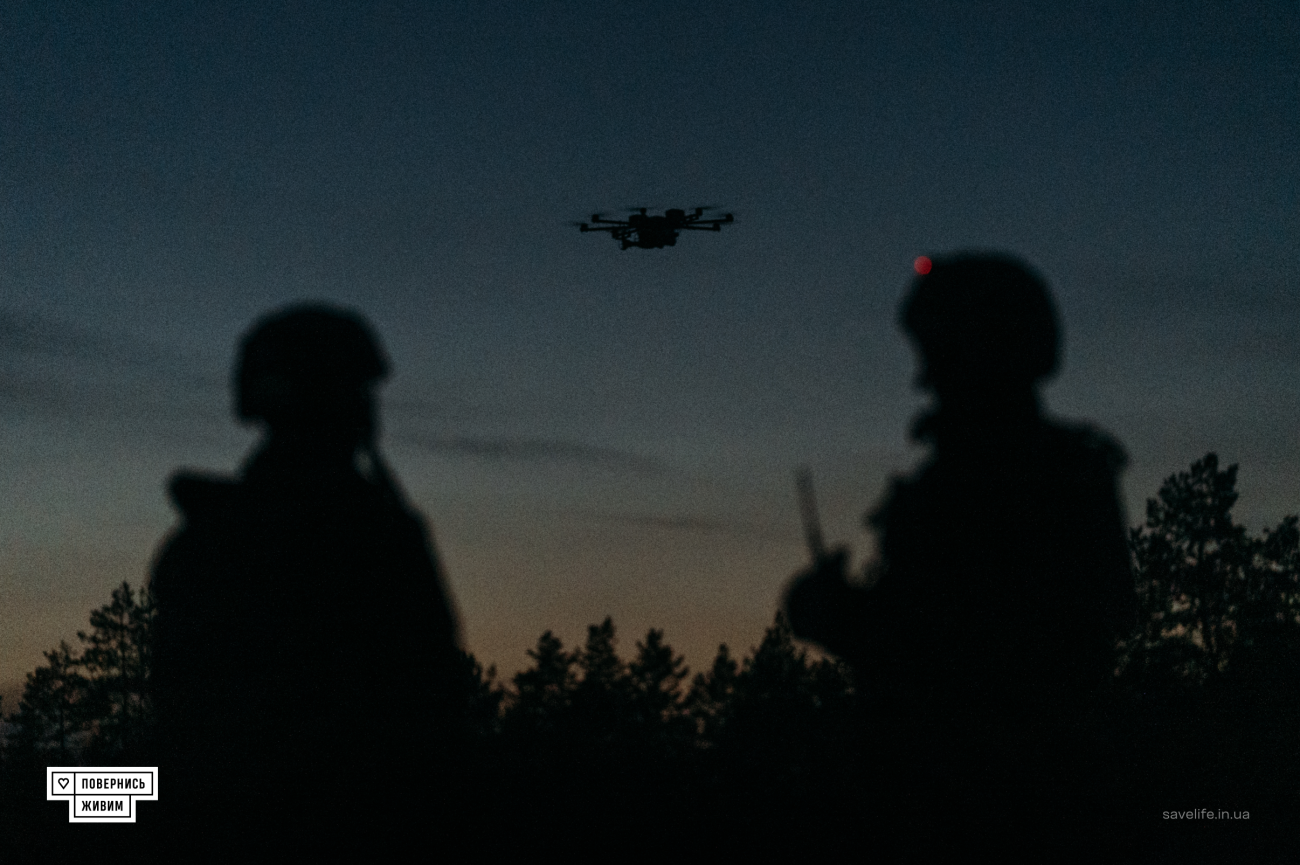
How to intercept “Shaheds” cheaply
The enemy’s tactics evolve constantly. Sometimes, 100 “Shaheds” target 20 different spots; at other times, 100 attack just three. Even if 80% are intercepted, the ones that reach their targets still do serious damage to Odesa, Kyiv, Dnipro, or other cities.
The enemy continues to modernize and invest in its systems. Arguably, the “Shahed” is one of the best products in its class globally now. But we are also evolving.
“Dronefall” is about boosting the capacity of specific units to intercept such aerial threats cost-effectively. It adds to the overall interception rate — without replacing mobile fire teams (despite their complexities), fighter jets, SAMs, anti-aircraft artillery, naval aviation, and so on. It’s a contribution. The greater the contribution from each component, the fewer drones reach our cities.
The more drones we shoot down using affordable means, the fewer expensive missiles we need to use — missiles that are critical for intercepting enemy cruise missiles.
Training and shortage of personnel
We have the “Yatagan UAV Operator School”, which began with training for drone interceptors. We’ve already planned that pilots from “Dronefall” will join the next training sessions to share their experience — primarily with instructors, but also with cadets. A training curriculum is one thing, but in real combat there are countless technical and tactical nuances not always covered during exercises.

We could double “Dronefall,” but it would require more people, tools, and resources. For example, in our “Let’s ground the enemy” project — essentially another form of “Dronefall” — we invested in enhancing air defence through radio reconnaissance and jamming capabilities. But these are still mostly FPVs and mobile groups focused not on entire frontlines, but on specific targets.
These targets include air defence batteries, radar units, airfields, communication nodes, command centers, and so on. Air Force air defence is built to protect strategic directions, major industrial sites, administrative hubs, or key defence lines. For a long time, drones didn’t interest the Air Force because they didn’t fit this scale.
But now there is active communication and cooperation. Everyone understands the problem, everyone wants to solve it — but not everyone always succeeds. There are many reasons for that. In the Ground Forces’ air defence, it’s easier: FPVs are more natural — often primary — tools. And soldiers who learned to use them against ground targets eventually transitioned to aerial ones. Many of them were quickly integrated into standard units.
That doesn’t mean there are enough means, people, or time. It doesn’t help when chaos hits and 7,000 Air Force personnel are reassigned to infantry roles.
Can we keep up with how fast drones evolve?
Another issue is the quality of tools procured by the state. Everyone knows that the procurement lag is far greater than the pace of technological development.
Most of what the Foundation purchases is not formally codified but works. The state buys codified and tested systems — but those were relevant six months ago. That doesn’t mean they don’t work — just that they are less effective.
We maintain constant interaction between the military and manufacturers. It becomes an ecosystem: someone finds a new solution; someone else adds a feature to improve effectiveness; some give detailed feedback to a responsive producer — and the system improves.
Currently, within “Dronefall” we’re shooting down large numbers of “Molnias”. These fly under one kilometer in altitude, which makes them hard to detect — but when they’re low-flying, it doesn’t take long to reach them or climb to interception height. So we eliminate them actively. Roughly speaking, the FPV used to shoot down a “Molnia” costs about 1 000 USD — the same as the “Molnia” itself. So the military often asks us: is this worth it? But we measure not by price — we measure by the potential damage if it hits its target.
Each military unit — or group of units — focuses on its own niche and builds motivation within it. One group explores interception systems, another detection, another power solutions. In the end, this is how “wings” evolve.
We often ask both military and manufacturers what would speed things up. And often, the answer isn’t money or means — it’s time. Everything has to be tested, and that takes time. The same applies to automation. We have 1 200 km of open frontline, plus thousands more across which drones can enter. That’s too much — and it means you can’t rely on just one or three types of means. We need many — and they must be diverse.
We are investing in the Air Force, Army Aviation, Naval Aviation, and “Dronefall” as a phenomenon. Air defence must be layered — and each layer needs tailored support to maximize the interception rate.
International and state partners struggle to keep up
Right now, we have strong cooperation with the Norwegians, who’ve made major contributions — one million euros for “Let’s ground the enemy” and around one million euros for “Dronefall” and more than two million for two more projects. They value the efficiency of the investment. They’re curious how it works. But the problem with “Dronefall” is that we can’t say what we’ll need next month — how many Starlinks, pickups, vans, or which tools will be relevant in two months.
There are 88 units in “Dronefall” each with rapidly changing needs. This makes it difficult to work with foreign government partners whose decision-making cycles can lag by six months. We can’t say what funds will be required in October, or for which brigades, or for what means, or with what efficiency — because we don’t know yet.
We see that the Ministry of Defence, the Ministry of Digital Transformation, the Air Force, and the Ground Forces understand the Shahed threat — and they’re doing what they can to fight it.
For example, Army Aviation has significantly improved its capabilities and effectiveness. Some anti-aircraft machine-gun units have become more efficient. Fighter jets — F-16s and others — perform well when they have missiles. The state understands the problem. Can it solve it quickly? Unfortunately, no. Why? Because that’s how states work — not just Ukraine. They are slow, bureaucratic, resistant to change.
We’ve now recorded 30 downed “Herbers” — a cheaper analogue of the “Shahed”. It’s a low-cost, simple tool that complicates air defence. For example, if 40 drones are launched — 20 decoys and 20 actual threats — they are hard to tell apart. Mobile fire groups and Army Aviation target whatever flies. This overloads air defences.
But “Herbers” vary widely in configuration. Some have warheads and serve the same function as a “Shahed”. Some carry cameras for reconnaissance. Some have both. They’re cheap, but still dangerous — and must be destroyed. And this too demands rapid adaptation.
Units just starting out in “Dronefall” might use up to seven drones to take out one target. Let’s say they’re just beginning — we provide a basic set: ground station, drones, maybe some extra gear. They might spend seven drones to take down a single target.
But another unit that’s been with us since September last year might achieve a one-to-one ratio consistently, across conditions.
Should volunteers help intercept “Shaheds”?
In June, the government launched a pilot initiative involving Territorial Defence volunteer units in Shahed interception. As a foundation, we’re skeptical. Interception requires access to software tools with real-time airspace data — plus the means, ammunition, explosives.
If we’re talking FPVs, many of these groups already function as mobile fire teams. Many are quite effective. But it’s unclear how this would work alongside interceptor units. It risks diluting national resources.
We should instead strengthen the Ground Forces’ air defence and already active specialized units — not spread out people and tools unnecessarily.
If we want to involve civilians, then why? How many additional crews will we gain? And at what cost? What effort would it take to bring those crews to operational readiness? Would the gain in downed targets be worth it?
