What was the money raised by the Polish public for Baykar used for? Three countries united to support the Ukrainian army, and here is what came of it.


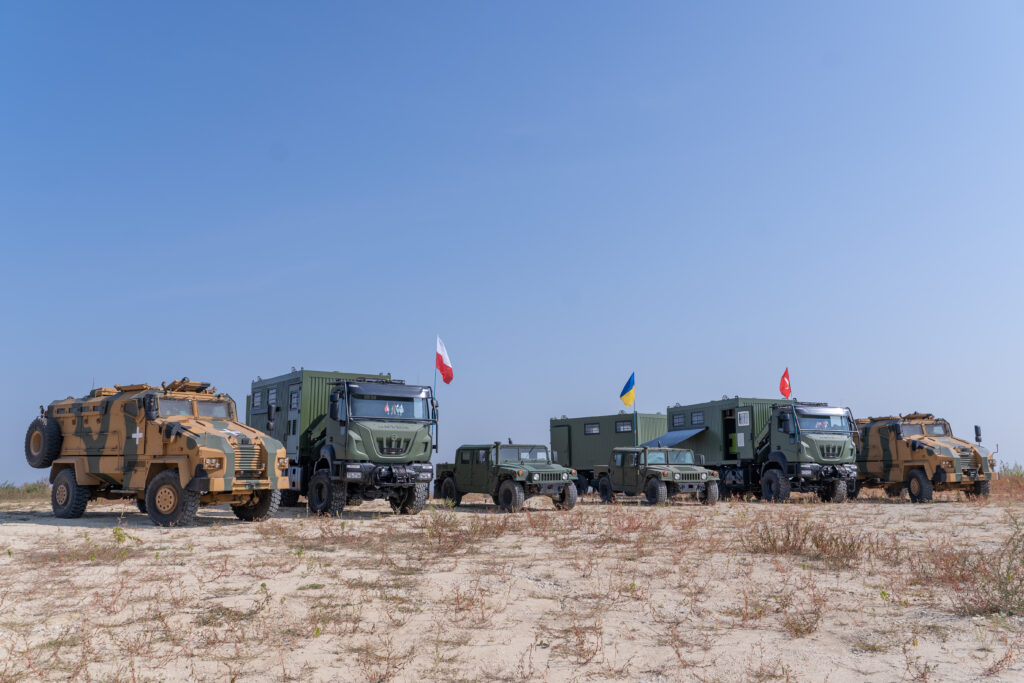
The “Cooperation Without Borders” project started over a year ago. As part of it, a fundraising campaign was launched in Poland. In 2023, the “Come Back Alive” Foundation for Competent Assistance to the Army, together with the Turkish company Baykar, handed over $1.8 million worth of property to the Defense Forces of Ukraine, including two maintenance and repair workshops. Afterward, military equipment worth more than $47 million was successfully repaired. You may find the details of the project below.
In July 2022, Polish journalist Sławomir Sierakowski announced a fundraising campaign to support the Ukrainian army. Over 22.5 million zlotys (approximately $5.638.55) were raised on the crowdfunding platform within a month. This amount was supposed to be spent on purchasing the Turkish Bayraktar TB2 attack drone.
However, the company Baykar, the manufacturer of these drones, decided to hand over the complex to the Defense Forces for free and to send the raised funds to charity. As a result, the “Come Back Alive” Foundation received 5.13 million zlotys and $600,000 from the initiators of the Polish fundraising for Bayraktar.
How did the “Come Back Alive” Foundation join this story?
The Bayraktars were first seen at the Ukrainian frontline back in 2018 — at that time, they were purchased by the government. After the full-scale invasion began, the Defense Intelligence of Ukraine contacted the “Come Back Alive” Foundation, requesting to buy this complex to resist Russian aggression. The foundation addressed Baykar, though the company did not sell its drones to non-governmental organizations at that time. The main reason behind this was to avoid risks like their further usage for criminal purposes.
The negotiations took approximately a month. As Taras Chmut, director of the “Come Back Alive” Foundation, recalls, it was a rough process, as the organization had to prove its trustworthiness. By then, “Come Back Alive” had already been helping the army for eight years and had an impeccable reputation. Therefore, in May 2022, the Foundation became the first non-governmental organization in history to purchase the Bayraktar complex.
“This is the first project where we received large, targeted, non-governmental funds from abroad, and it’s a good precedent. Moreover, this is the first Baykar project of this type in Ukraine — and perhaps the only one. At least I haven’t seen anything similar publicly disclosed,” Taras Chmut explains.
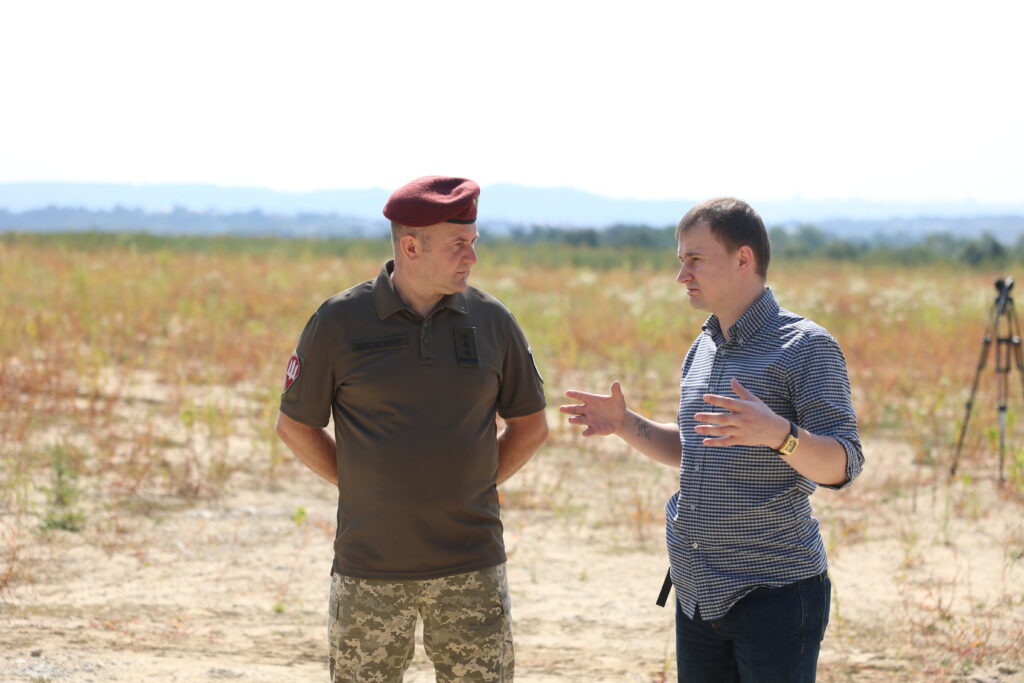
In July 2023, the people of Poland collected funds for a Turkish attack drone, but it was unclear how to buy it and hand it over to the Defense Forces. That is when “Come Back Alive” joined the process.
This was not the first time Haluk Bayraktar, the CEO of Baykar, decided to hand UAVs over free of charge. The decision turned out to be a good reputation campaign for the manufacturer, as at that time, many international media outlets mentioned this case. In his interviews, Haluk spoke about his unconditional support for Ukraine. According to journalists, there is even a plush toy in the form of a Bayraktar TB2 drone with a trident, the Ukrainian coat of arms, in his office.
All three parties together (Ukraine, Polish representatives, and the Turkish Baykar) decided where to invest the funds raised by the Polish people. This explains the project’s title — “Cooperation Without Borders.” Part of the raised funds was sent to humanitarian needs, while the rest was spent on military aid.
What was the money used for?
The Foundation purchased a mobile modular camp for the 150th training center of the Territorial Defense Forces Command from a Polish company for PLN 5.13 million (about $1.2 million). The camp includes 31 living and training tents, lighting and power systems, heaters, furniture, camouflage coverings, a laundry tent, a first aid station, generators, air conditioners, containers, and racks for weapons.
“The Polish army and the troops of other NATO countries use the same modular tent cities. The 150th training center was chosen because many military personnel train on its territory, making it an appropriate and effective asset for them,” explains Chmut.
Another 740,000 euros were spent on two maintenance workshops for the Naval Infantry Command and Air Assault Forces of the Armed Forces of Ukraine. These special complexes, developed by “Come Back Alive” specialists, take into account all military needs. Each workshop is equipped with standard tools for repair as well as additional devices like a manipulator, a generator, a compressor, and a mobile tire changer.
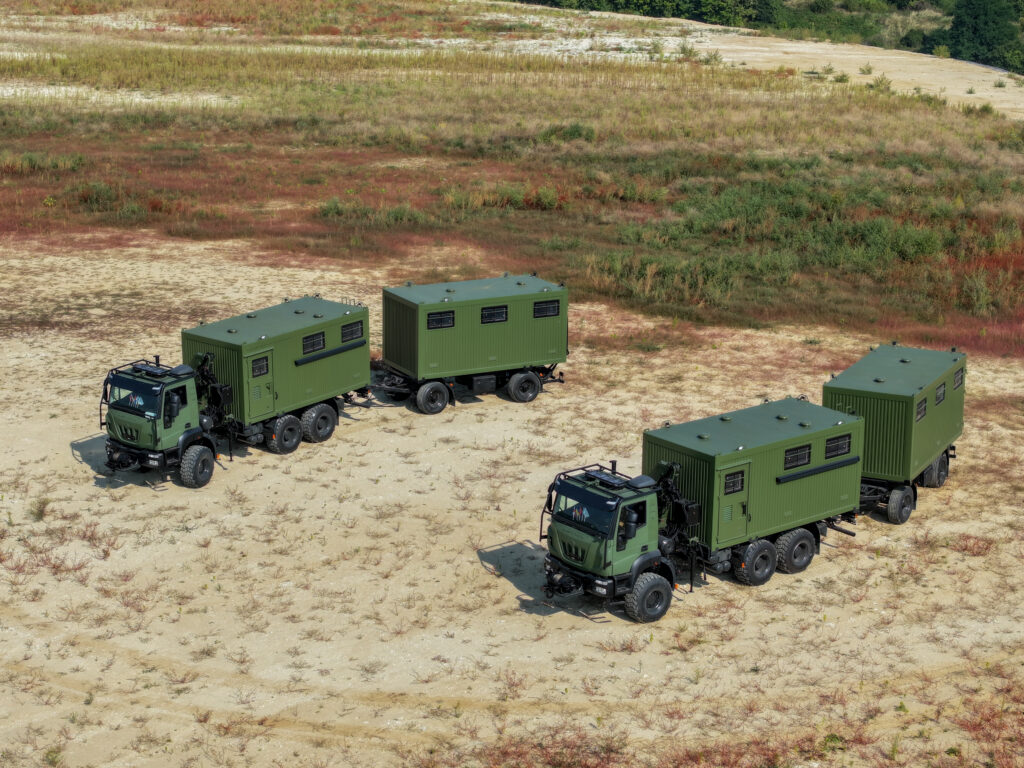
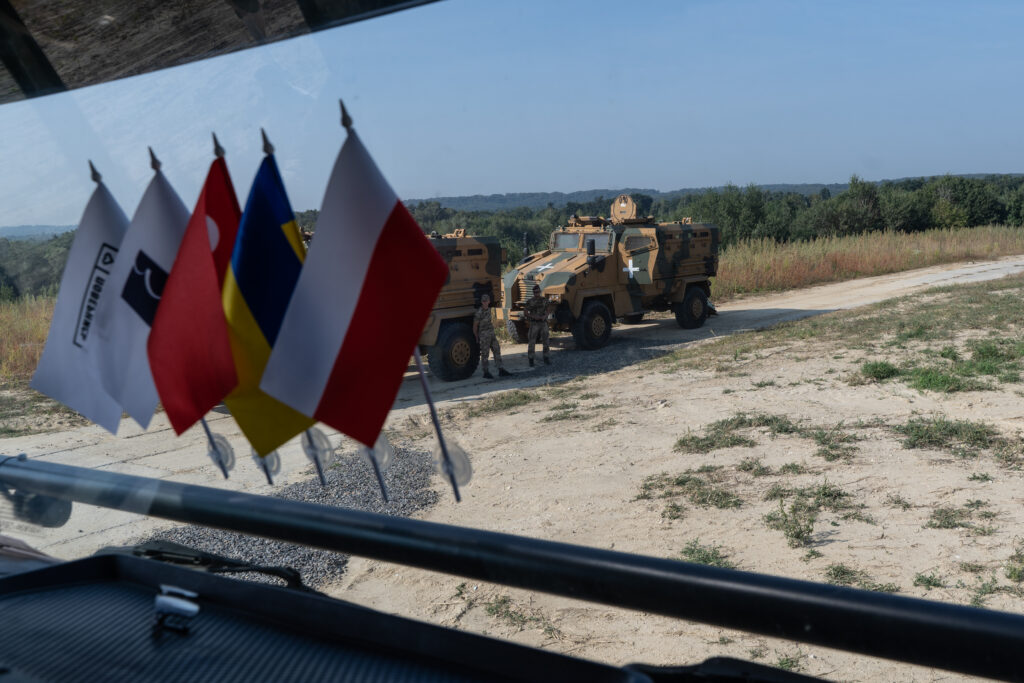
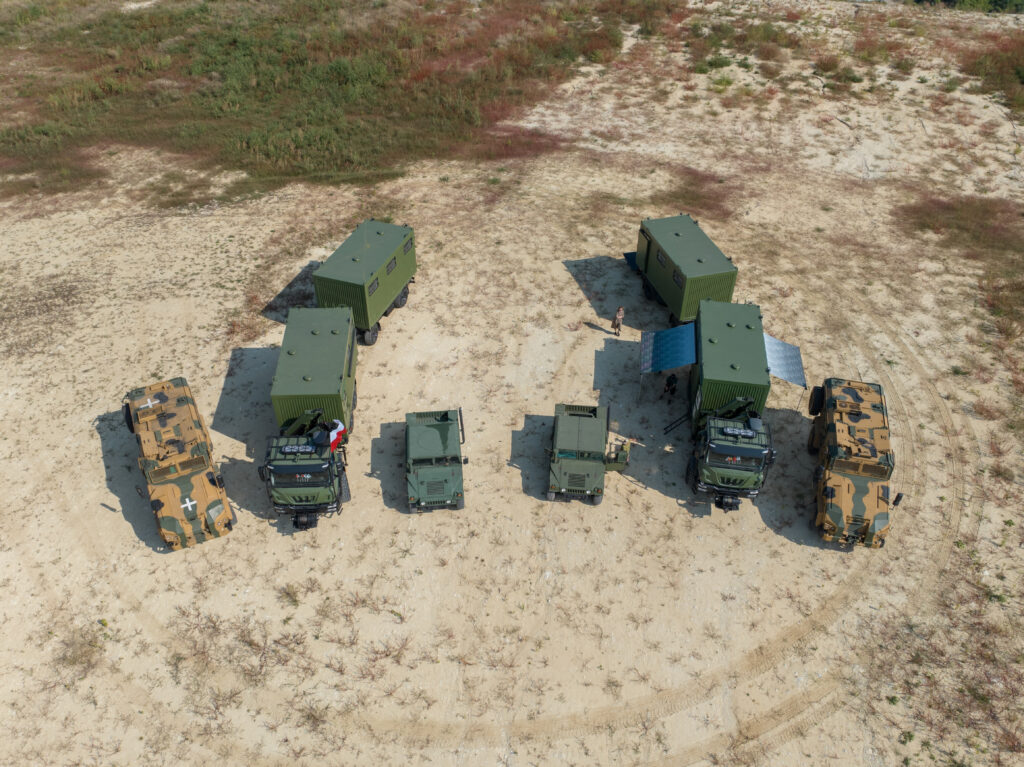
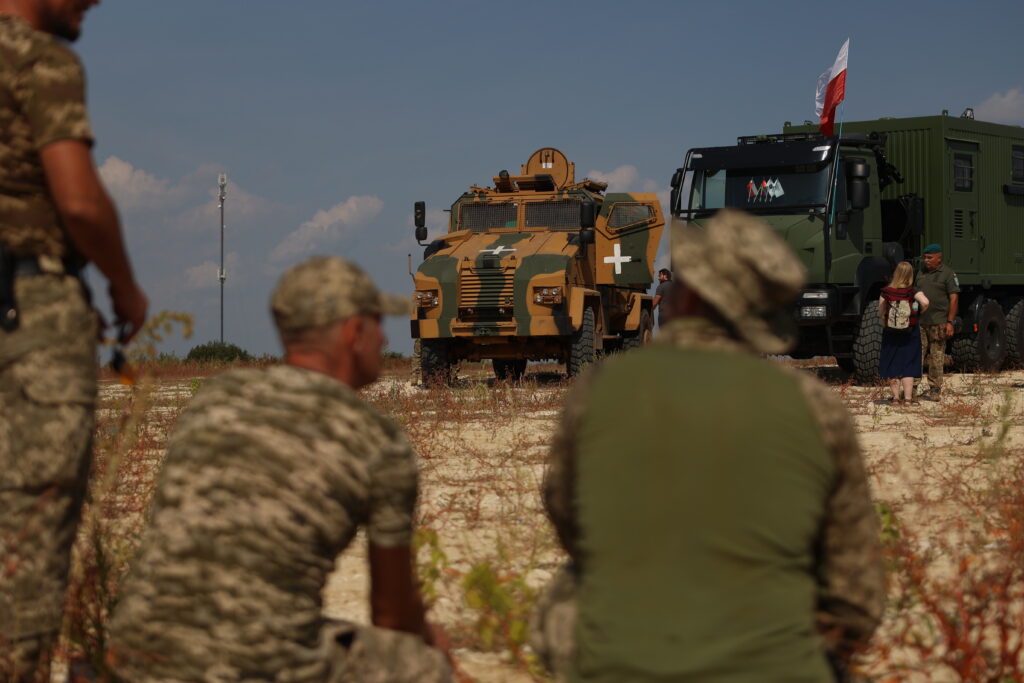
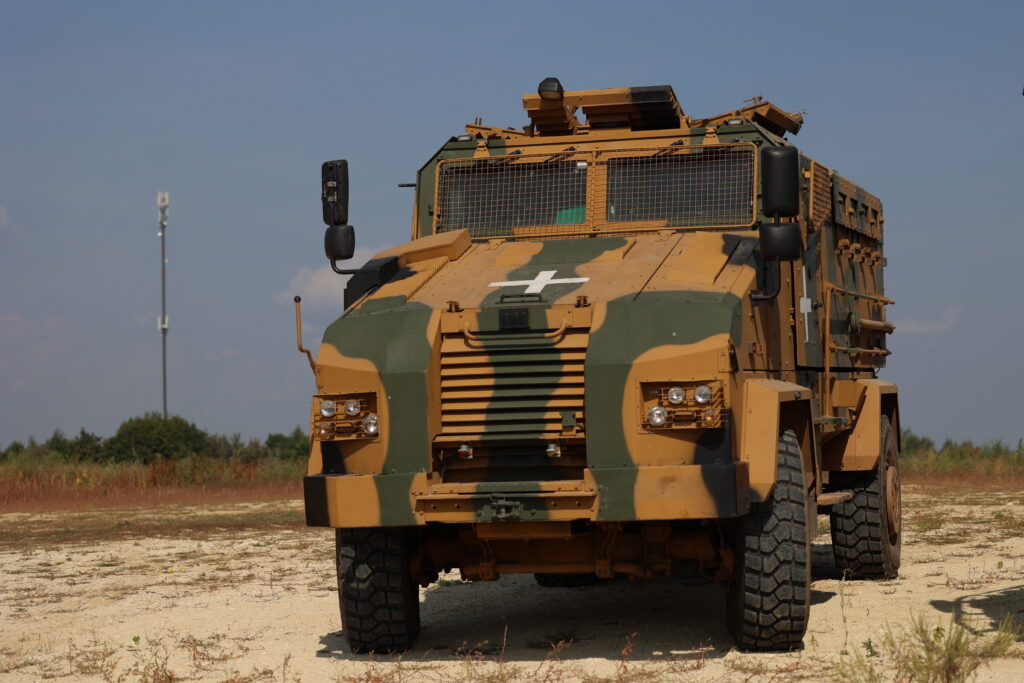
Such workshops usually operate near the front line, so there is no need for the military to send broken equipment to stationary workshops located deeper in the country. The mobile service station crew can perform welding work, cut metal, and replace specific parts.
“This was a tough project. A lot of things happened for the first time: tons of negotiations, approvals, agreements, and stumbling blocks. The purchased modular camp is a military product we needed to carry across the border, which was quite a challenge at that time. The maintenance workshops were designed according to our requirements specification, for which we previously collected feedback from those who had already received such equipment,” says the director of the Foundation.
The Results
Proper training is crucial for the survival of soldiers and the quality of warfare. After the Territorial Defense Forces of the Armed Forces of Ukraine received a modular tent city for the training center, approximately 20,000 new soldiers from combat brigades were trained on its territory.
“The modular tent city helped us solve the problem of accommodating a large number of military personnel in the field. We were able to start full-fledged recruitment and training processes for our recruits without a military barracks fund. Due to the NATO standards infrastructure, soldiers get relatively comfortable living and training conditions. The tent city’s level of autonomy is unlike the old Soviet standards, providing comfort regardless of weather conditions,” explains Colonel Volodymyr Poltavets, head of the 150th Training Center of the Armed Forces.
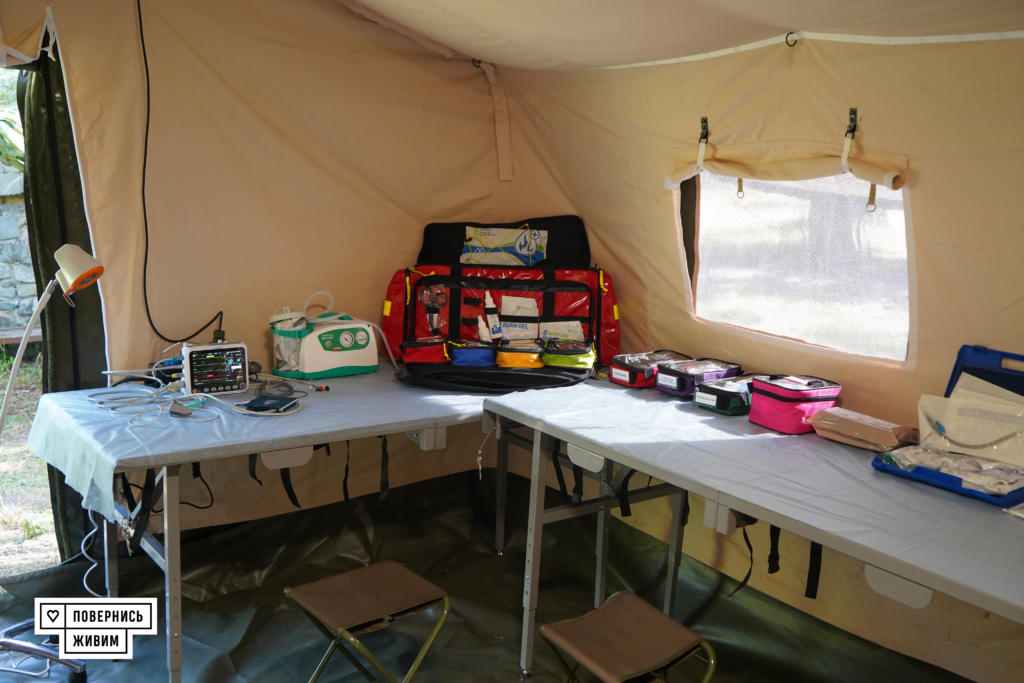
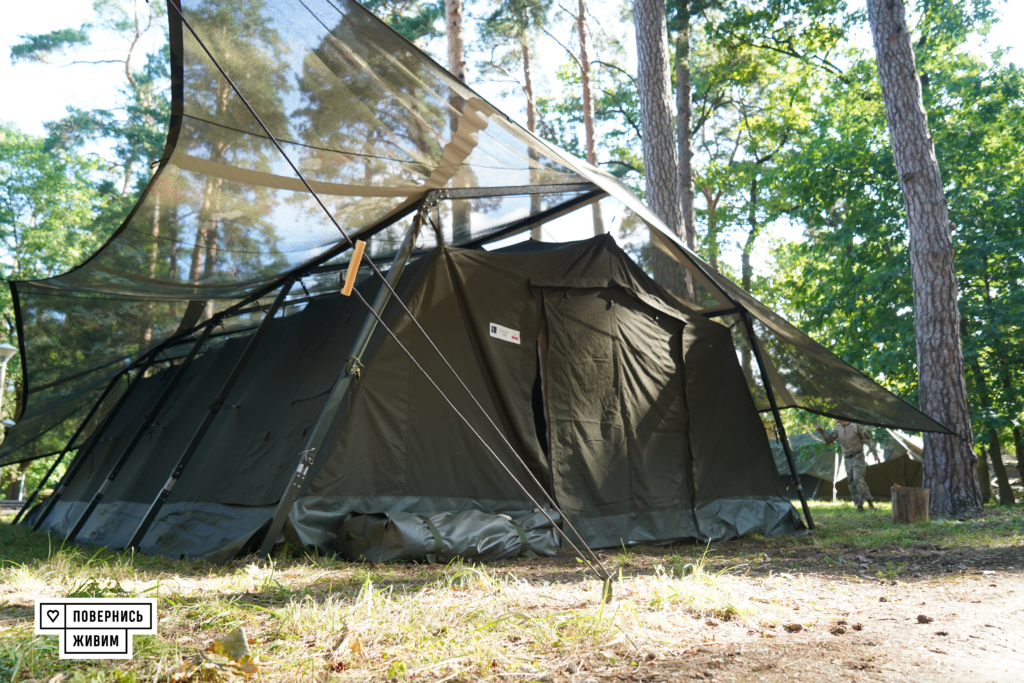
If needed, the tent city can be quickly moved to a different location to maintain the training of soldiers with minimal disruption. This mobility ensures rapid response to changes in exercise conditions and the security situation.
The 150th Training Center now offers an extended preparation program. Newcomers are trained in the Basic Combat Training School, where they obtain essential knowledge and skills necessary for every soldier.
“Another crucial part of our training center is the Sergeant Personnel Training Center“,- adds Volodymyr Poltavets. Training courses are held in the following fields: the department commanders course, the basic level instructors course, the middle leadership course. By the way, we also provide UAV and collective training.”
Since the full-scale invasion began, the “Come Back Alive” Foundation has purchased ten maintenance workshops for the Defense Forces. Their crews have carried out more than 1,100 repairs of Western military vehicles, including American HMMWVs, Cougars, MaxxPros, Oshkoshes, Turkish Kirpis, Australian Bushmasters, British Mastiffs, and Huskies.
Such workshops usually operate near the front line, so there is no need for the soldiers to send broken equipment to stationary workshops located deeper in the country. Mobile service station crew can perform welding work, cut metal, and replace specific parts.
“The movable automobile repair shop considerably eases and speeds up the repair of armored vehicles and other military equipment,” states Dmytro, a platoon commander of the automotive equipment repair unit. “For example, we used to pick up wheels from units, do the tire fitting, and bring them back. Now, we arrive on-site in the field to repair and service the wheelbase, engine, and more.”
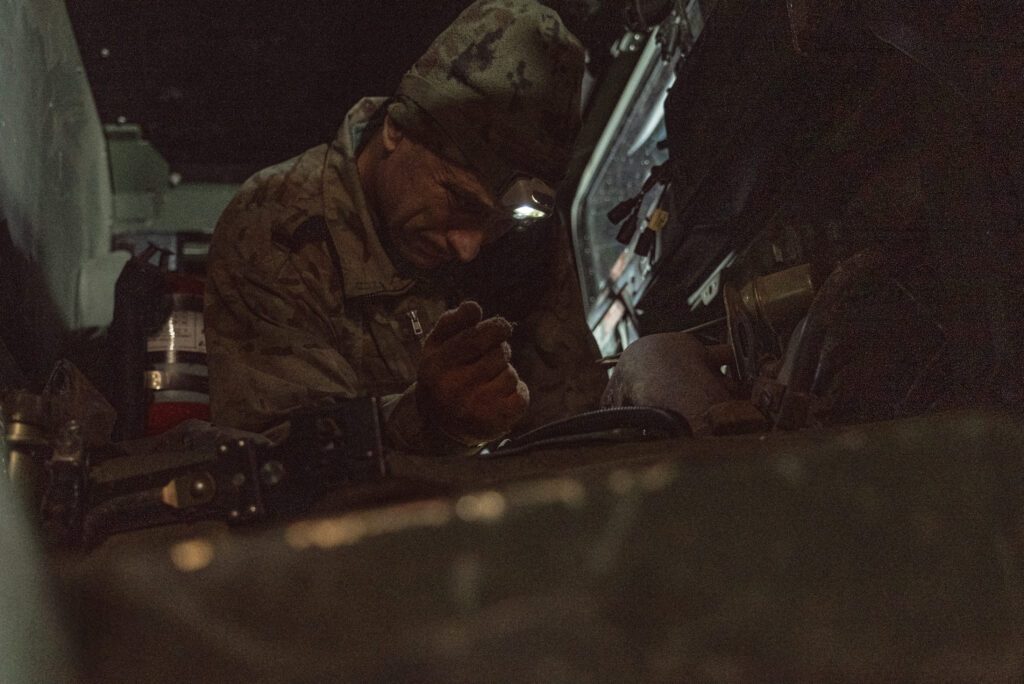
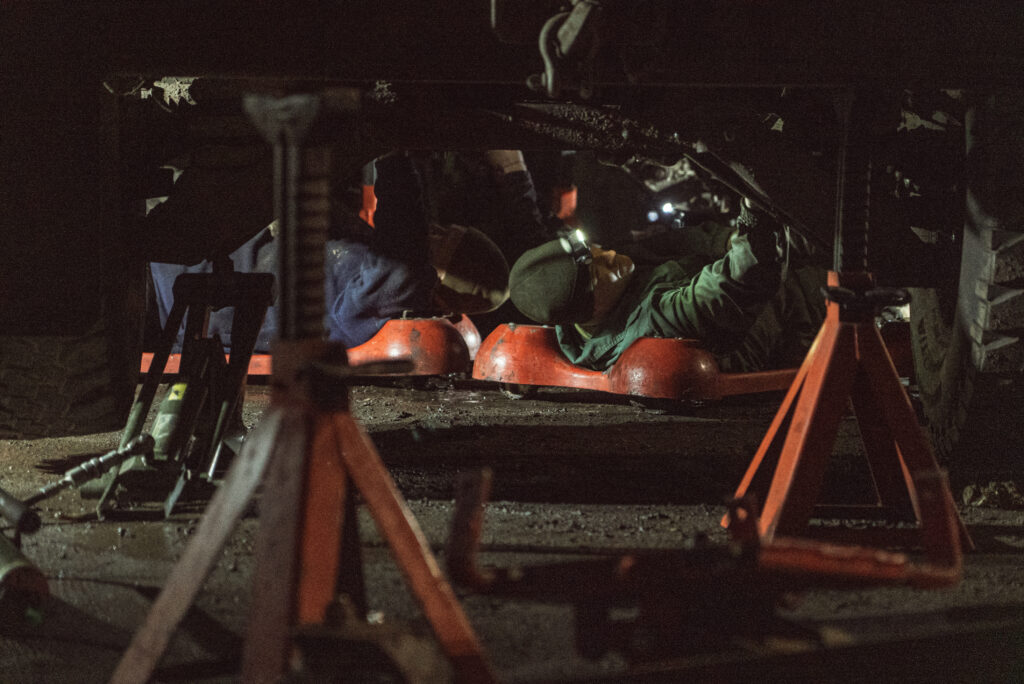
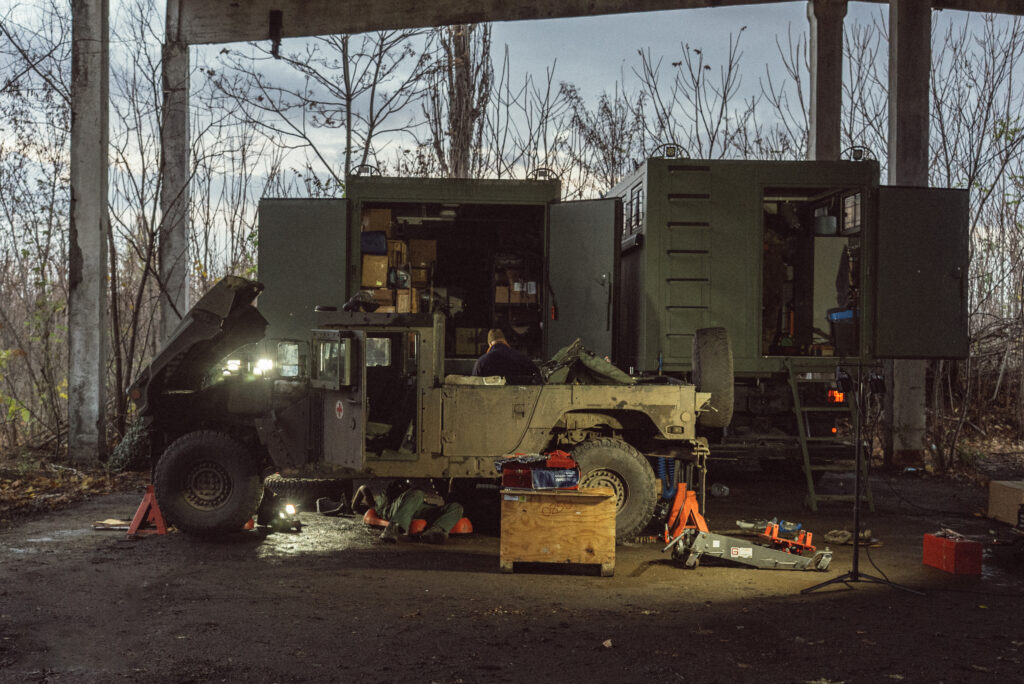
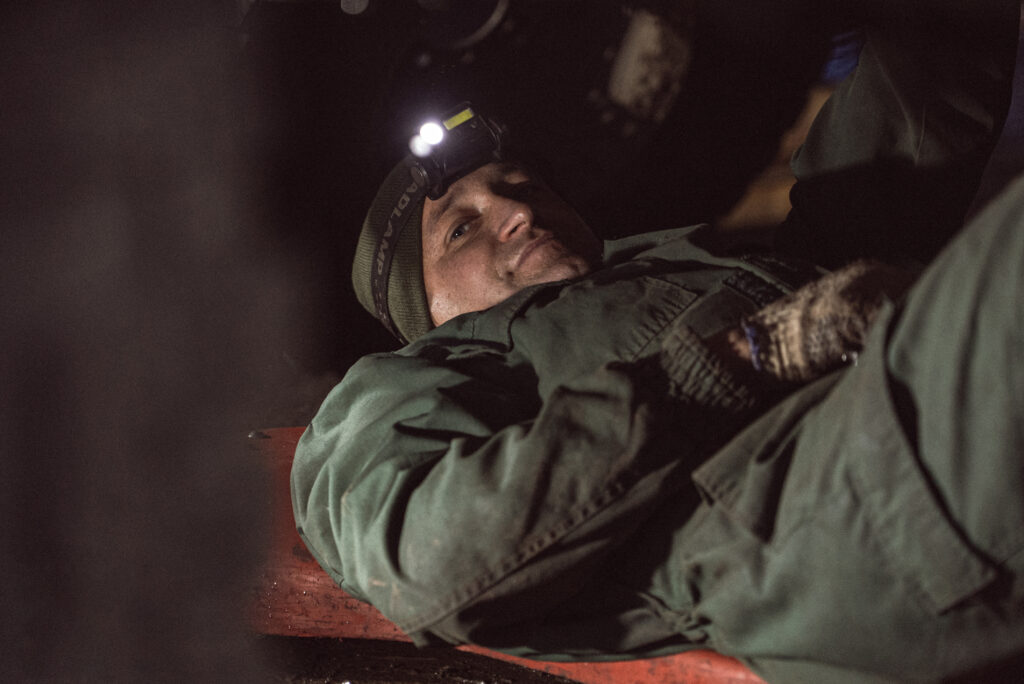
After the two maintenance repair shops were transferred to the military, their crew repaired over 300 pieces of military equipment at a total cost of at least $47 million.
“We’ve used a car manipulator multiple times to install or remove engines and other units. The manipulator is handy and well-designed. The same can be said for the workshop, which is equipped with almost everything necessary for autonomous maintenance of foreign and, if needed, Soviet cargo and lightly armored vehicles. The workshop has its own generator, compressor, and machine tools such as a drilling machine, lathe, and pneumatic equipment,” says Dmytro.
The “Come Back Alive” Foundation continues to support the transferred property. For instance, as Taras Chmut recalls, when the tent zippers broke, they were replaced with funds from the organization. “Come Back Alive” also handed over pickup trucks for the needs of mobile service station crews.
Projects like “Cooperation Without Borders” are an indispensable part of the history of a charitable organization that has been helping the Ukrainian army for more than ten years. Ukraine is strengthened in its fight for sovereignty and independence thanks to the support of Western partners, including Poland.
“We are actively developing the international line of work. This way, we aim to attract not only funds from individuals but also government funds under military support programs for Ukraine. We care to show that we perform our work transparently, publicly, quickly, and efficiently,” says Taras Chmut.
